
If you are bringing a product into Europe, the Netherlands is one of the strongest places to base your warehousing and fulfilment. This guide covers what it actually costs, how the pricing works, and the things that decide whether you pick the right partner or sign up to a quote that looks cheap and is not. It is written from experience. We source Dutch fulfilment for foreign companies, we read the quotes that come back, and the patterns below are what we see again and again.
We can get you several fulfilment quotes for your Dutch operation, free of charge. Get multiple quotes for your Dutch warehousing / fulfilment operation.
Quick answer: how much does fulfilment cost in the Netherlands?
For a typical light e-commerce parcel, expect a total of roughly €8 to €15 per shipped order once fulfilment and shipping are combined, excluding VAT. The pick and pack handling itself is usually only €1 to €2.50 per order. Shipping is the largest line for most light parcels, and it varies more by destination and carrier than by warehouse. Storage runs about €8 to €26 per pallet per month, and most providers add a fixed monthly account fee that weighs heavily at low volumes. The headline pick rate tells you very little on its own. The number that matters is the total cost per shipped order to the countries you actually sell to.
Why base your fulfilment in the Netherlands?
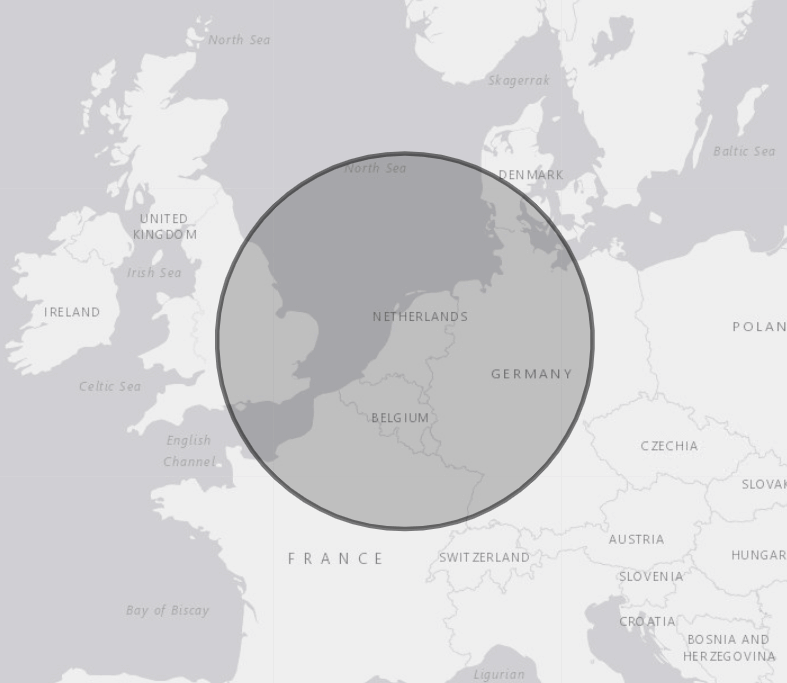
The Netherlands sits in the middle of the largest consumer market in Europe. There are more than 150 million people within a 500 kilometre radius, which means most of Western Europe is a one to two day delivery from a Dutch warehouse. The country runs on two world-class gateways: the Port of Rotterdam for sea freight and Schiphol for air freight, both feeding directly into a dense road and rail network.
For an incoming brand there are three practical advantages that matter more than the geography:
- A deep market of fulfilment providers, so you have real choice and real price competition.
- A strong cross-border parcel network, with carriers and postal consolidators that reach every EU country at competitive rates.
- The Article 23 import VAT deferral, which lets you avoid paying 21 percent VAT in cash at the border. More on that further down.
That combination is why so many non-EU brands use the Netherlands as their European hub rather than running from their home country.
How much does fulfilment cost in the Netherlands?
Fulfilment is not one price. It is a stack of separate costs, and providers quote them in different ways. Here are the typical 2026 ranges, excluding VAT.
| Cost component | Typical range | Unit |
|---|---|---|
| Storage, bulk pallet | €8 to €12 | per pallet / month |
| Storage, flexible or small footprint | €2 to €6 | per pallet / week |
| Inbound handling, per delivery | €15 to €22 | per delivery |
| Inbound handling, per pallet | €2 to €7 | per pallet |
| Pick and pack, base | €1.00 to €2.50 | per order (first item included) |
| Each additional item | €0.25 to €0.56 | per item |
| Packaging | €0.40 to €0.70 | per order |
| Assembly and kitting | €40 to €42.50 | per hour, or roughly €0.40 to €0.70 per item |
| Returns | €3.00 to €4.50 | per order |
| Account management or platform fee | €275 to €550 | per month |
| Shipping, light parcel | €5.50 to €17 | per parcel, by destination and carrier |
A few things to read from that table. The pick and pack rate, the one most brands compare on, is a small part of the total. Shipping is usually the biggest line. And there are fixed monthly costs that do not appear in a per-order rate at all but quietly set your real cost per order, especially while your volume is still low.
To make it concrete, here are two simple examples for domestic shipping. Cross-border changes the picture, which is exactly the point we come to below.
Smaller brand, 500 orders per month, shipping within the Netherlands
- Storage, 20 pallets at €9: €180
- Inbound, one delivery: €50
- Pick and pack, 500 at €1.75: €875
- Packaging, 500 at €0.60: €300
- Shipping, 500 at €6.25: €3,125
- Account management: €350
- Total: about €4,880, or €9.76 per order
Growing brand, 2,000 orders per month, shipping within the Netherlands
- Storage, 60 pallets at €8: €480
- Inbound, two deliveries: €120
- Pick and pack, 2,000 at €1.50: €3,000
- Packaging, 2,000 at €0.55: €1,100
- Shipping, 2,000 at €5.90: €11,800
- Account management: €400
- Total: about €16,900, or €8.45 per order
The cost per order falls as you grow, because the fixed costs spread across more orders and handling rates improve with volume. Both examples assume domestic shipping. The moment you ship across the border, shipping becomes the dominant line and the differences between providers open up.
Use the calculator below to model your own operation. Set your monthly volume, your markets, your weight, and whether you need assembly, and it builds the total cost per shipped order for you.
NordicHQ · Market Entry Tooling
Most fulfilment quotes look cheap on the headline pick rate and hide the real drivers: assembly, the destination shipping spread, and fixed monthly costs that only make sense at volume. This tool builds the number that matters, total cost per shipped order, from representative market rates. Adjust the inputs to fit your operation.
This is the model. The decision needs your actual product, volumes and markets, matched against providers who fit, not just the cheapest line. That is what we do. We run the sourcing, read every quote on a true cost-per-order basis, and hand you a shortlist that fits how you actually operate.
How these figures are built
The estimate combines representative ranges for pick and pack, assembly, packaging, storage and fixed monthly costs seen across recent Dutch fulfilment sourcing, with indicative carrier rates for a tracked parcel to each destination. The lower bound reflects economy tracked shipping and lean fulfilment terms; the upper bound reflects courier shipping (DPD, UPS) and richer service levels. Fixed monthly costs are spread across your order volume, which is why the per-order figure falls as volume rises. Shipping rates carry a small fuel surcharge in practice. These are planning figures, not a quote. A provider's actual pricing depends on your product, volumes, carrier contract and service level.
Indicative planning estimate prepared by NordicHQ. Figures exclude VAT and are not an offer. NordicHQ advises foreign companies entering the Netherlands and the Nordics on fulfilment, fiscal representation and market entry. Oslo · Amsterdam.
Why the cheapest quote is rarely the cheapest provider
This is the single most common mistake we see. A brand lines up five quotes, sorts them by the pick and pack rate, and picks the lowest. That number almost never reflects the real cost.
The problem is that providers structure their quotes differently. One gives you a single all-in rate per order that already includes assembly and handling. Another gives you a low pick rate and then bills storage, kitting, returns and shipping as separate lines. A €1.20 pick rate is not cheaper than a €3.50 all-in rate once you add the four lines that sit underneath it. The only fair comparison is the total cost per shipped order, built on the same assumptions for every provider.

UK-NL: Centralized Inventory or Multi-Country Operations?
Are you a UK enterprise considering a warehouse in the Netherlands while maintaining an office in another country (like Germany)? From a VAT perspective, this is rarely the optimal choice.
Why centralization in the Netherlands pays off:
Keeping both your Dutch BV and your inventory (3PL) in the Netherlands ensures your operations fall under a single VAT regime. Spreading them across two EU countries triggers:
- Dual VAT Registration: You must register and file returns in both countries, doubling your compliance costs.
- Intra-Community Complexity: Moving your own stock between a Dutch warehouse and a German office triggers complex reporting requirements.
- Cash-Flow Loss: Only a Dutch entity with local storage can fully utilize the Article 23 License, which allows you to import goods without paying 21% VAT upfront at the border.
→ Contact us to model your specific UK-to-EU logistics setup
There is a second trap hiding inside this. If your product needs any value-added work, bundling, inserts, multi-language labels, serial number scanning, then assembly is the line that decides your cost, not pick and pack. And it is the line providers are most likely to quote by the hour, or mark as “to be determined”, or leave out of the headline entirely. Two quotes can look identical on the per-order rate and differ by a third once assembly is priced properly. Pin it down as a fixed cost per order before you compare anything.
Thomas’ tip: Ask every provider for the same four numbers: pick and pack per order, assembly per order, storage per pallet per week, and shipping per parcel to each of your markets. If a provider will only give you a “from” price or an hourly rate for assembly, treat that as the number to chase, not a detail to leave for later.
The shipping trap most foreign brands miss
Shipping is usually your largest cost per order, and it behaves in a way that surprises people. The same parcel to the same country can cost wildly different amounts depending on the carrier the provider uses. We have seen a light parcel to Spain quoted at around 6 euros through an economy tracked service and around 15 euros through a standard courier. Same parcel, same destination, more than double the cost, purely because of the carrier.
Two consequences follow from this.
First, shipping should not drive your choice of provider. The carrier menu is broadly the same for everyone. A provider that looks expensive on shipping has usually just defaulted to a pricier carrier, and that can normally be changed. Choose the provider on fit and service, then optimise the carrier.
Second, watch the Southern European zones. Many Dutch providers price Spain, Italy and Portugal in a more expensive courier band than France, Germany and the Benelux. If two of your launch markets sit in that band, your average shipping cost can quietly double against what a France-only estimate suggested. If you sell into Southern Europe, ask specifically which carrier and which zone each provider uses for those countries.
Hidden costs and assumptions to check before you sign
Beyond the headline rates, a handful of things sit in the small print and decide your real cost. Each of these has caught brands out.
- The “plug into Shopify” assumption. Many quotes, and the monthly software licence attached to them, assume you run a standard webshop with an off-the-shelf integration. If you run a bespoke order system, you can be mispriced, or charged for a WMS licence you do not need. Tell every provider exactly what system you run before they quote.
- Minimum monthly fees. Some providers apply a minimum monthly warehouse fee, for example 1,000 euros, regardless of your activity. At launch volumes you may not reach that minimum on handling and storage alone, which means you are paying a floor until your volume catches up.
- Tiered account management. Account support is often a fixed monthly charge that rises in steps with your volume, from a few hundred euros up to well over a thousand. It is invisible in a per-order rate but very visible on the monthly invoice.
- Volume changes the answer. Because fixed costs spread across your orders, the cheapest provider at 2,000 orders a month is often not the cheapest at 8,000. Model the provider against where you expect to be, not just where you start.
- Label and process compatibility. If you generate your own courier labels, for example from your own system and a thermal printer, some providers cannot support that and will require you to run labels through their system instead. This rarely shows up in the price and can be an operational dealbreaker. Confirm it before anything else.
Inbound and customs is a different job than fulfilment
It is tempting to look for one provider that does everything from the port to the customer’s doorstep. In practice, the inbound and customs leg is a different specialism from B2C fulfilment, and very few providers are strong at both.
A provider built for customs and B2B work can carry a per-order admin fee that makes direct-to-consumer fulfilment uneconomic. A provider built for fast e-commerce fulfilment may not have the customs depth you need. This matters most when you move from air freight to sea freight through Rotterdam, where customs clearance, import VAT handling and container intake become a real part of your cost. Treat the inbound and customs side as its own decision, and do not assume your fulfilment partner is automatically the right party for it.
Do you need a Dutch BV or a fiscal representative?
If you are a non-EU business importing into the Netherlands, you need to sort out your VAT position before you sign a warehouse contract, not after.
When you import goods, you normally pay 21 percent VAT at customs straight away. Register under Article 23 and you can defer that VAT and account for it through your regular VAT returns instead. For a business holding stock and importing regularly, that is a significant cash-flow advantage.
To use Article 23 as a non-EU business, you appoint a fiscal representative in the Netherlands. This is the practical alternative to setting up a full entity from scratch. The representative is jointly liable for your VAT, handles your filings with the Dutch tax authority, and is a separate role from your fulfilment provider. Your warehouse handles logistics. Your fiscal representative handles VAT.
The Benelux gateway: compliance for regulated consumer goods
If you sell regulated products such as supplements, cosmetics or food into the EU, VAT is only half the story. Under the General Product Safety Regulation, these products need a Responsible Person based in the EU, and as a non-EU resident you cannot fill that role yourself, even with a local entity. To sell across borders through the One-Stop Shop, a non-EU business also appoints an EU-based intermediary who is jointly liable for the VAT filings. The name and EU address of your representative often has to appear on the product label to clear customs in Rotterdam or Antwerp.
Thomas’ tip: Do not focus only on VAT. The EU is tightening notification rules for several product categories, and many non-EU standard dosages and formulations exceed EU limits. Make sure whoever acts as your representative understands your specific product, not just your paperwork.
The Benelux Gateway: EU Compliance for Food Supplements
“A non-EU brand (US/Canada/UK) wants to sell vitamin gummies across the EU using the One-Stop Shop (OSS). They plan to hub their operations in the Netherlands or Belgium. What are the legal requirements?”
The Requirement: GPSR & The “Responsible Person”
Under the General Product Safety Regulation (GPSR), every food supplement sold in the EU must have a Responsible Person based within the Union. As a non-EU resident, you cannot fulfill this role yourself, even if you own a local BV or SRL.By using a Dutch BV as your import hub, you can apply for an Article 23 license. This allows you to defer the 21% import VAT, meaning you don’t pay it at the border. However, you must appoint a local legal representative to satisfy customs and safety authorities.
To use the OSS (One-Stop Shop) to sell to customers in Germany, France, or Italy, a non-EU entrepreneur must appoint an EU-based Intermediary. This intermediary is jointly liable for the VAT filings, making it a critical professional appointment.
Your EU-based 3PL (Fulfillment Provider) or a specialized service provider can often act as your legal representative. Their name and EU address must appear on your product labels to pass through customs in Rotterdam or Antwerp.
One country, one VAT regime
If you are a UK or non-EU business considering a Dutch warehouse while keeping an office or stock in another EU country, think carefully before splitting them. Keeping both your entity and your stock in the Netherlands keeps you under a single VAT regime. Spreading them across two countries triggers VAT registration and filings in both, complex reporting when you move your own stock between them, and the loss of the Article 23 cash-flow benefit, which only works with a Dutch entity holding local stock.
For the detail, read our guides on Article 23 VAT registration and deferral, and on fiscal representation versus setting up a BV.
The fulfilment outsourcing checklist
Most providers will not give you a real price until they have spoken to you, and the quality of that first conversation tells you a lot about what the partner will be like to work with. Go into it prepared. The questions below are the ones that prevent the unpleasant surprises: a software link that turns out not to be possible, a cut-off time that does not apply to pallets, higher inbound costs than expected, shipments outside the EU that are not supported.
Our advice is to go through this entire list with each provider and get a clear answer to every point before you sign.
Shipping and packaging
- Is shipping an all-in price, or are packing and shipping billed separately?
- What parcel sizes can you ship, and up to what weight? Are heavier shipments possible with a surcharge?
- Which carriers do you work with, and could we run a different carrier on our own contract?
- Can you send letterbox parcels? This can make a real difference to cost.
- Can you ship and receive pallets, including half and quarter pallets, and who supplies them?
- What are the rates per parcel size (XS to XL), for letterbox parcels, and for pallets?
- What are the rates per order volume band per month? It usually gets cheaper with volume.
- Are there extra costs when more items are packed per order?
- Who supplies packaging materials, and at what cost?
- Can you include a paper packing slip, and can the label and packing slip carry our branding?
Cross-border and customs
- Which countries will we ship to, and what are the rates per parcel size for each?
- Are shipments outside the EU supported, and who arranges the export documents? This is often forgotten, even for a parcel to Switzerland.
- What does the picture look like at higher volume and into new markets, so you are not re-pricing in a year?
Storage and inbound
- What are the storage costs per shelf, rack and pallet location? Ask for the dimensions.
- What are the inbound costs, per shipment and per item?
- What is the cut-off time for same-day processing, and are there extra costs for a later one?
Returns
- Can you process returns, and what does the process look like, including quality control?
- What are the shipping and processing costs for a return?
Systems and requirements
- Are all the software links we need possible, for both order entry and stock management, with our webshop and our system, and at what cost?
- Do all products need an EAN barcode, or are there other delivery requirements?
- Can you handle ADR hazardous goods, for example lithium batteries?
- Can customers collect orders in person?
Commercials
- Are there any start-up or implementation costs?
- Are there other fixed monthly costs, minimums, or account fees?
How we help
Sourcing Dutch fulfilment well takes more than collecting quotes. It takes reading them on a like-for-like basis, knowing which questions expose the real cost, and matching a provider to how you actually operate rather than to the lowest line on a rate card. That is what we do.
We run the sourcing for you, approach providers that fit your product and markets, read every quote on a true cost-per-order basis, and hand you a shortlist you can decide on with confidence. There is no charge for getting you the quotes.
Contact us to find a suitable 3PL, warehousing or fulfilment partner.
Related reading
- Warehousing and 3PL in the Nordics
- The best logistics hubs in Europe
- Article 23 import deferral & fiscal representation